
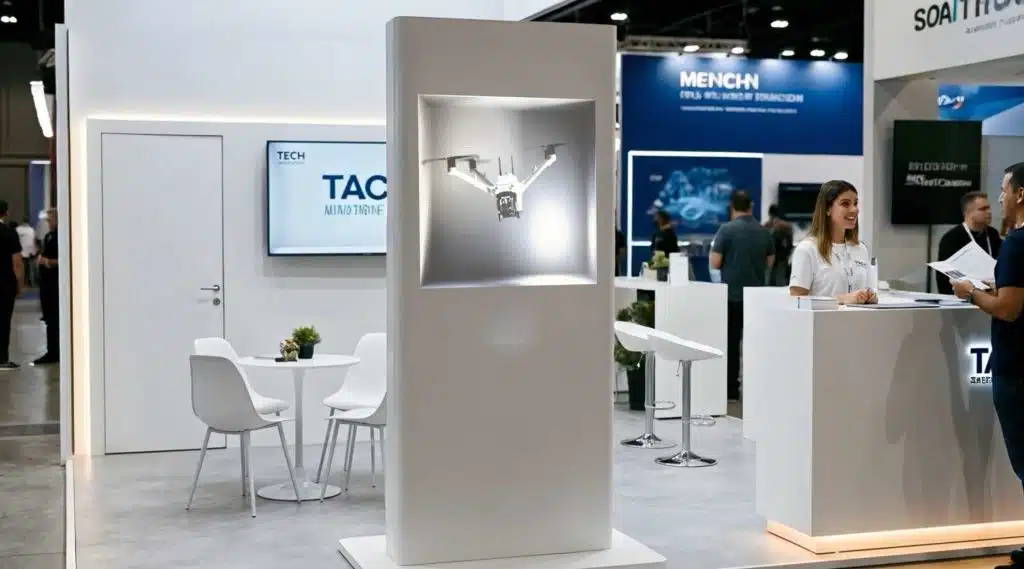
Companies invest significant time, budget, and attention into designing their trade show booths. They think carefully about the location, structure, lighting, materials, furniture, product display, and the way visitors will move through the space. Every detail is planned to create the right impression.
But one of the most visible parts of the booth is often treated too late in the process: the screen. In many cases, the screen becomes a place to play a general company video, a product loop, or a presentation that was not specifically created for the trade show environment. It fills the space, adds movement, and gives the booth something to show. But a booth screen can do much more than that.
The Screen Is a Communication Platform
A booth screen is not just a surface for playing content. It is a live communication platform inside the booth. It shapes the first impression, sets the visual energy of the space, and often becomes the first brand message visitors experience before speaking with anyone from the team.
Before a visitor reads a headline, understands the product, or starts a conversation, they respond to movement, scale, rhythm, color, and visual energy. This is where the screen creates what many exhibitors are really looking for: stop power.
Why Trade Show Content Is Different
In a busy trade show environment, visitors are constantly walking, scanning, comparing, and deciding where to stop. They are surrounded by other booths, messages, lights, screens, conversations, and distractions. Visual content needs to work fast. It needs to be clear, focused, and designed for people in motion.
That is why trade show content should not be treated the same way as a regular corporate video. A video that works on a website or in a meeting room may not work the same way on a large booth screen. The scale is different. The viewing distance is different. The rhythm of the environment is different. The content needs to be built for the space.
Designing for Distance and Proximity
From a distance, the visual message needs to be simple, strong, and easy to recognize. Large movement, clear shapes, strong contrast, and focused messaging can create the first moment of attention. From closer range, the same content should still feel relevant, intentional, and connected to the booth, the product, and the conversation.
This is why the screen should be planned as part of the booth experience, not as an afterthought. It should support the main message, work with the screen size and format, and create a visual presence that fits the physical design. The goal is not only to make the booth look better. The goal is to help the booth work better.
Technology Opens New Possibilities
Today’s display technologies allow screens to become more integrated into the booth itself. LED walls, large-format displays, corner screens, flexible LED screens, and custom screen setups give exhibitors more ways to use digital content as part of the space. A screen is no longer only a rectangle on a wall. It can become part of the booth architecture, part of the storytelling, and part of the visitor experience.
But technology alone is not enough. A large screen with generic content can still feel passive. A smaller screen with the right visual idea can become highly effective. What matters is the connection between the content, the space, the message, and the visitor.
The Screen Should Be Part of the Strategy
The best booth screens do not feel like screens that were added at the end. They feel like part of the booth architecture, part of the story, and part of the visitor experience. The right visual content can help a booth stand out from a distance. It can create curiosity, communicate the brand’s energy, support sales conversations, and help visitors remember what they saw after they leave.
The screen should not be planned as decoration. It should be part of the booth strategy from the beginning. Because at a trade show, the booth is not only a physical space. It is a communication platform. And the screen is one of the most powerful tools for bringing that platform to life.
Frequently Asked Questions
Quick answers about booth screen content, trade show visuals, and how to make your display work harder.
Can we use our regular company video on the booth screen?
You can, but it is rarely the most effective approach. A general company video is built for viewers who are seated and paying attention. At a trade show, visitors are moving, distracted, and making fast decisions. Content designed specifically for the booth environment performs significantly better.
How early should we plan the booth screen content?
Ideally at the same time you plan the booth design. The screen should be considered as part of the space, not added after the structure is finalized. Knowing the screen size, format, and placement early allows the content to be built for the specific environment.
What kind of content works best on a large booth screen?
Content that is visually strong from a distance and still meaningful up close. Clear visual storytelling, focused messaging, strong motion design, and content that connects directly to the product or service. Simplicity, clarity, and visual energy tend to perform best at booth scale.
Need Visual Content That Works at Trade Show Scale?
We create booth screen content designed for the trade show environment, built for stop power, visual clarity, and the way visitors actually experience your space.