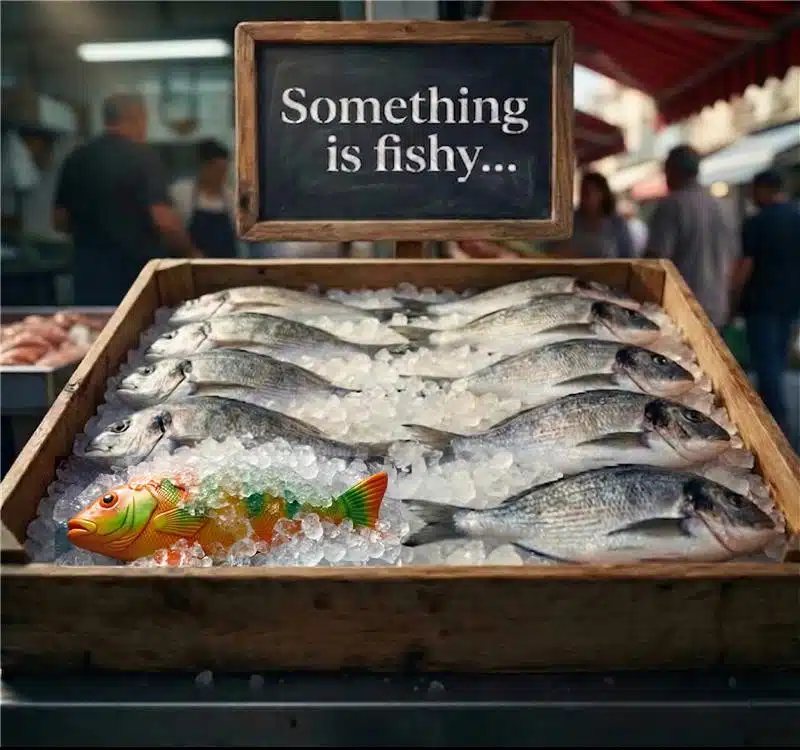
AI visuals often have a certain “AI smell.” Even when they look technically impressive, something feels slightly off. Not always obvious — but noticeable.
So what creates that feeling, and why is the human brain so sensitive to it?
When viewers feel that an image looks “fake,” they’re reacting to subtle visual signals the brain immediately recognizes as unnatural. Our brains evolved to detect anomalies — and AI still produces many of them.
In the real world, lighting is messy — unexpected reflections, dust particles in the air, uneven shadows, imperfect highlights. AI tends to generate lighting that is overly smooth and evenly distributed. The result often feels sterile, almost like a synthetic 3D render with no physical imperfections.
Real materials carry history. Human skin. Industrial metal. Fabric. Nothing in reality is perfectly clean or mathematically smooth. Tiny scratches, imperfections, pores, inconsistencies — these details are what make objects feel real. AI often smooths everything into a visual average. The result? A polished but lifeless image.
AI models are trained on billions of popular images — which means they naturally gravitate toward familiar angles, safe compositions, and visually “correct” framing. That’s why so many AI visuals create the feeling of: “I’ve seen this somewhere before.” Even when technically impressive, they often lack originality and specificity.
There’s a reason perfect visuals often feel emotionally distant. In nature, perfection doesn’t exist. Imperfections are signals of reality. A small scratch on a product. A slightly harsh shadow. A subtle lens distortion. These details make an image feel documented rather than generated.
The goal is no longer just generating an image. It’s carefully breaking the synthetic perfection. In many cases, we intentionally introduce subtle imperfections back into the image.
🎞️ Grain — A slight film or sensor texture helps break the plastic smoothness AI tends to create.
📷 Lens Imperfections — Small optical distortions like chromatic aberration mimic the behavior of real-world cameras. These tiny flaws make a surprisingly big psychological difference.
🎨 Human Color Grading — AI often pushes colors too far: overly saturated, overly cinematic, unnaturally clean. Manual color work brings visuals back into a range that feels believable to the human eye.
The challenge in 2026 is no longer generating images — anyone can do that. The real skill is understanding how realism actually works, what the brain perceives as authentic, and how to bring humanity back into synthetic visuals.
In marketing, trust is everything. And when visuals feel too perfect, people instinctively pull away from them.
Because realism is not about perfection. It’s about believable imperfection.
Quick answers about AI visuals, realism, and why some images feel more believable than others.
AI models are trained to generate visually appealing outputs — which often means averaging out imperfections. Real-world images have noise, inconsistent lighting, and physical wear. AI removes these by default, which ironically makes results feel less believable to the human brain.
Yes — and this is exactly what professional visual work adds. By carefully reintroducing grain, lens behavior, and manual color grading, experienced teams can bring AI outputs into a believable visual range. It requires knowing what the brain perceives as authentic, not just what looks impressive technically.
Not at all. AI visuals work very well when used correctly and finished professionally. The key is understanding which projects benefit from AI speed and flexibility, and ensuring the final output goes through the right human oversight to feel credible — not synthetic.
We help B2B marketing teams create visual content that feels credible and on-brand — using the right combination of AI speed and human craft.